How to Make a Breakfast Hot Dog That Actually Works
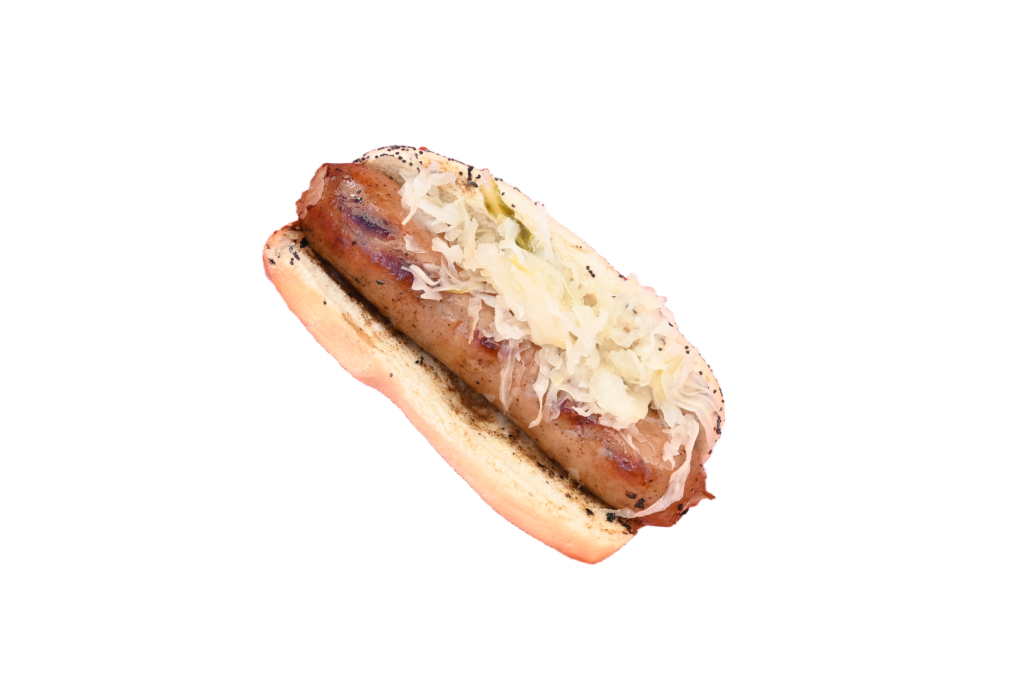
The breakfast hot dog sounds like a joke until you try to make one properly. Most versions fail for the same reason: they treat breakfast like a novelty topping bar. A standard bun, a basic frank, some scrambled eggs thrown on top, maybe syrup or hash browns if someone is feeling reckless, and the result is usually messy, heavy, and oddly unsatisfying.
A good breakfast hot dog has to work as a composed dish. It needs contrast, restraint, and structure. The sausage has to belong at breakfast. The eggs need the right texture. The bun has to support moisture without turning gummy. Most importantly, every component has to pull in the same direction. You are not building a carnival item. You are building something that should taste like breakfast, even though it is shaped like a hot dog.
This is one of those foods that rewards a little judgment. Once you get the underlying logic right, it becomes easy to improvise. You can go diner-style, sharp and savory with eggs and cheese. You can lean toward Southern breakfast flavors with sausage gravy or pimento cheese. You can even nudge it toward sweet-savory territory, but only if you know exactly how much sweetness the rest of the sandwich can handle.
The first decision is the sausage
If you start with a standard beef hot dog, you can make something edible, but it will not necessarily taste like breakfast. The flavor profile is wrong more often than not. A classic hot dog has garlic, paprika, coriander, maybe smoke, and a firm snap. Those are excellent qualities at a ballpark, but they can fight with eggs and softer breakfast flavors.
A breakfast hot dog works best when the sausage itself bridges the gap between frankfurter and breakfast link. There are a few ways to get there.
Pork sausages are the easiest route. A long breakfast link, especially one with sage, black pepper, and a little sweetness, naturally belongs next to eggs. Some butchers sell extra-long breakfast links, and those are almost ideal. If you cannot find them, you can shape breakfast sausage into a long, even cylinder and cook it gently so it holds together. That gives you the breakfast flavor you want without asking a traditional hot dog to do a job it was not built for.
If you want the snap and cleaner shape of a real hot dog, choose one that is mildly seasoned and not too smoky. A pork and beef blend tends to play better with breakfast ingredients than an all-beef frank that leans aggressive. Avoid anything heavily spiced, heavily smoked, or oversized. Once the sausage gets too thick, the ratio falls apart. You end up eating a hot dog with breakfast garnish rather than a true breakfast hot dog.
I have had the best results with sausages around six inches long and not much thicker than a thumb. That size fits standard buns, cooks evenly, and leaves enough room for egg and sauce without creating a balancing act.
Why most breakfast hot dogs collapse
The two biggest problems are moisture and scale. Eggs release moisture, cheese can split into grease, sauces soak the bun, and potatoes add bulk without cohesion. If you pile everything on at once, the bun caves in, the fillings slide, and each bite becomes random.
Scale matters just as much. At breakfast, people usually want richness, but they still want clarity. A successful plate of eggs, toast, sausage, and potatoes works because each bite can be adjusted. You can cut a piece of sausage with some egg, then take a bite of toast. In a hot dog format, all those elements stack into a single lane. That means every ingredient has to be measured against every other one.
One egg is often too much for a single breakfast hot dog unless it is cooked very softly and folded tightly. A full handful of hash browns sounds appealing, but usually ruins the shape. Syrup sounds fun, but more than a light drizzle can flatten the entire dish into sugary chaos. A breakfast hot dog needs editing.
The bun matters more than people think
A weak supermarket bun can sabotage the whole idea. You need enough softness to make the first bite easy, but enough structure to resist steam and fat. A split-top bun is useful because it stands upright and toasts beautifully, but a standard side-split bun works if it is fresh and not too airy.
Brioche sounds like a natural fit, yet it is often too sweet and too delicate. When paired with eggs and sausage, it can push the whole thing toward dessert. Potato buns can work, especially if you toast them well, though they sometimes compress under a heavy filling. A classic enriched white bun, lightly buttered and toasted until golden at the edges, is still the most reliable choice.
Do not skip toasting. A toasted bun gives you texture, helps resist sogginess, and creates a little insulating layer between bread and filling. This is one of those small moves that separates a carefully made breakfast hot dog from a rushed one.
Eggs should support, not dominate
Egg texture is where a lot of otherwise smart cooks stumble. Fluffy diner-style scrambled eggs look generous, but they can be too bulky and too loose. Large curds break apart and tumble out. On the other extreme, a firm omelet strip can feel rubbery and disconnected from the sausage.
The sweet spot is a soft folded scramble, cooked just until set, then tucked into the bun in a narrow ribbon. The eggs should be tender and moist, but not wet. They need to drape around the sausage rather than sit on top of it like a blanket.
If you want a neater finish, cook a thin omelet in a small nonstick pan, fold it once or twice, and trim it to bun width. This is especially useful if you are making several at once. The flavor is slightly cleaner and the shape is easier to control. For a single serving, though, soft scrambled eggs usually taste better.
Season the eggs enough to stand on their own. Sausage brings salt, but eggs need their own seasoning to avoid tasting flat. A small pinch of black pepper helps, and a tiny amount of chive or scallion can work if the rest of the sandwich stays restrained.
Cheese is not optional, but it must be chosen carefully
Cheese acts like mortar. It rounds edges, binds the eggs to the sausage, and contributes just enough richness to make the breakfast hot dog feel intentional. But not every cheese behaves well in this format.
American cheese is still the practical champion. It melts smoothly, clings to the sausage and eggs, and adds creaminess without breaking. Cheddar can be good, especially a mild or medium one, but sharp cheddar often turns greasy and can bully the other flavors. Pepper jack usually brings too much distraction. Swiss is pleasant in theory and weak in reality.
If you like a little more character, pimento cheese can be excellent, but only in a small amount and only if it is spread thinly so it melts into the bun instead of sitting in a cold lump. A breakfast hot dog should not require jaw gymnastics.
Condiments need discipline
This is where people get tempted to show off. Maple syrup, hot sauce, bacon jam, mustard, gravy, salsa, aioli, even cream cheese if someone is improvising with whatever is in the refrigerator. Most of these can taste good individually. Very few belong together.
The best condiments for a breakfast hot dog either add brightness or deepen savory flavor. Acid matters more than people expect. A few drops of a vinegary hot sauce can wake up eggs and sausage at once. A thin smear of mustard can work if the sausage has a classic frank profile. Ketchup usually makes the whole thing taste juvenile and sweet, though a spicy tomato jam can be much better.
Maple belongs in moderation. Think glaze, not pour. You want a hint that plays off the pork, not a sticky stream running down your hand. Sausage gravy can work too, but then it needs to be the star, with eggs used sparingly and no extra cheese beyond what the gravy can absorb.
The version that works most consistently
After trying more combinations than I care to admit, I keep coming back to a straightforward build: a breakfast-style pork sausage, a toasted bun, soft scrambled egg, American cheese, and a sharp, acidic finish from hot sauce or pickled jalapeños. It tastes coherent. It eats cleanly. It feels like breakfast rather than a stunt.
Here is the process I recommend if you want to get it right the first time:
- Cook the sausage gently, either on a griddle or in a skillet over medium to medium-low heat, until browned and cooked through.
- Toast the buttered bun cut-side down until lightly crisp and golden.
- Lay cheese in the hot bun or over the sausage so it starts melting immediately.
- Scramble one egg softly, keeping the curds small and the texture just set, then fold it into the bun beside the sausage.
- Finish with a restrained condiment, such as a few dashes of hot sauce or a thin swipe of maple butter.
That method sounds simple because it is simple. The point is not complexity. The point is timing. The sausage should be hot, the bun toasted, the cheese melted, and the eggs freshly cooked. If one element sits around while you handle the others, the whole thing loses momentum.
Timing and heat make the difference
A breakfast hot dog is a short-order food. It does not like to wait. Eggs continue cooking from residual heat, buns steam from trapped moisture, and sausages lose their surface texture if they sit covered. You want to build and serve immediately.
When I make these at home, I usually cook the sausage first and hold it in a warm spot for no more than a couple of minutes while I toast the bun and scramble the egg. If the sausage is especially juicy, I blot it lightly before it goes into the bun. That small step can preserve the bread.
Cheese placement matters too. If you put cheese on the bun first and then add a very hot sausage, it melts into the bread and forms a protective layer. If you put cheese on top of the eggs after they have cooled slightly, it can stay plasticky. Use heat with intention.
Add-ins that earn their place
Bacon is the obvious extra, but it is not always the best one. Crisp bacon can shatter and slip out, creating more mess than payoff. If you use it, break it into small pieces and embed it into the eggs or cheese so it becomes part of the structure.
Potatoes are even trickier. Hash browns or tater tots have great breakfast appeal, but they turn the hot dog into a balancing exercise. If you must include potatoes, use a very thin layer of crisp shredded hash browns pressed into the bun like a lattice. The goal is texture, not volume.
Vegetables work when they are chosen for brightness rather than bulk. A few pickled onions, some sliced scallions, or finely diced roasted peppers can sharpen the sandwich without destabilizing it. Raw tomato is nearly always too wet. Avocado sounds nice but tends to mute everything.
Some variations genuinely improve the breakfast hot dog. Others only make it more crowded. A good rule is that every addition should either add acidity, crunch, or a deeper savory note. If it adds only mass, skip it.
Sweet-savory versions need a careful hand
There is a real path to a sweet breakfast hot dog, but it is narrow. Pork sausage and maple are natural partners. So are buttered buns and a touch of https://erickhgzz958.fairmontdigest.com/posts/flavor-packed-hot-dog-ideas-for-sausage-lovers fruit preserve. Yet too much sweetness makes eggs taste dull and cheapens the savory side.
If you want that profile, try a maple sausage with soft eggs and a tiny swipe of apple butter inside the bun. Not a spoonful, a swipe. That gives you sweetness, fruit, and aromatic depth without soaking the bread or overpowering the sausage. A little cracked black pepper helps keep it grounded.
Another good route is a sausage with a honey hot sauce finish. The sweetness is present, but the acidity and heat keep the palate alert. This is much more effective than pouring syrup over everything and hoping for balance.
Regional ideas that make sense
Not every breakfast hot dog should taste the same. The concept is flexible if you respect the basic engineering.
A Southern-leaning version can be excellent with a pork sausage, folded egg, and a spoonful of thick sausage gravy. You need a sturdy bun and restraint with the gravy, but the flavor logic is there. A Midwestern diner version might use a mild frank, American cheese, eggs, and a little mustard, almost like a cross between a breakfast sandwich and a griddled lunch counter dog. In the Southwest, roasted green chile and cheese make more sense than syrup or bacon jam ever will.
What does not work is trying to force every regional breakfast icon into one bun at once. Grits, gravy, bacon, cheese, eggs, hot sauce, and fried potatoes may all be delicious, but not in a single handheld package. Once you pass a certain threshold, you stop making a breakfast hot dog and start making a fork problem.
Common mistakes worth avoiding
Most failures come from enthusiasm rather than lack of skill. People add too much, cook too hot, or choose ingredients for novelty instead of harmony.
Here are the errors I see most often:
- Using a large all-beef hot dog that overwhelms the breakfast flavors.
- Overcooking the eggs until they turn dry and crumbly.
- Skipping bun toasting, which almost guarantees sogginess.
- Adding too many bulky extras, especially potatoes and thick bacon strips.
- Using sweet condiments too heavily, which muddies the sausage and eggs.
If you avoid those, you are already most of the way to something good.
Making them for more than one person
A single breakfast hot dog is easy. Four or six requires some planning. The challenge is keeping the eggs tender while finishing the sausages and buns at the same time. The easiest method is to cook all the sausages first, keep them warm on a low sheet pan in the oven, then toast the buns and cook the eggs in batches just before serving.
For a crowd, omelet-style eggs are more reliable than loose scrambled eggs. Cook thin sheets, fold them, and cut them into strips that fit the buns. It is slightly less luxurious than fresh soft scramble, but much neater and more consistent. A steam table approach, where eggs sit in a pan for twenty minutes, will ruin the entire project. They toughen fast and lose all charm.
Set condiments out sparingly and with some curation. One spicy option and one sweet-savory option are enough. If you put out six sauces, people will build chaos.
A note on what “works” really means
When I say a breakfast hot dog works, I do not mean it merely tastes good in a guilty-pleasure way. Plenty of ridiculous combinations taste fine for two bites. A successful version holds together from first bite to last, tastes like a complete idea, and leaves you wanting another one at some point in the future. That is a higher bar.
There is also a practical test. Could you serve it at a brunch special and not apologize for it? If the answer is yes, you are on the right track. If it feels like something that needs a wink and a dare, it probably has not been edited enough.
The nice thing about this format is that it teaches restraint. A breakfast hot dog does not need more ingredients than a good breakfast sandwich. In fact, it usually needs fewer. Once the sausage, eggs, cheese, bun, and one bright finishing note are all doing their jobs, there is very little left to improve.
The version I would gladly eat again
If I were making one for myself tomorrow, it would look like this in spirit, even if I varied the details: a medium-size pork sausage with black pepper and sage, browned slowly; a toasted split-top bun brushed with butter; one softly scrambled egg folded into a narrow ribbon; a slice of American cheese melted against the sausage; a few slices of pickled jalapeño; and two or three drops of a sharp vinegar-based hot sauce. Nothing more.
That combination has enough richness to feel like breakfast, enough acidity to stay lively, and enough structure to survive in your hands. It does not pretend to be clever. It just works.
And that is the real secret. A breakfast hot dog succeeds when it stops trying to be outrageous and starts behaving like a well-built sandwich. Once you approach it that way, the whole idea stops sounding strange. It starts sounding like breakfast.
Under Construction Hot Dogs
1225 W U.S. Hwy 50, Pueblo, CO 81008
FAQ About hot dog
What are different types of hotdogs?
Under Construction Hot Dogs offers a classic all-beef hot dog, a quarter-pound Jumbo Dog, a Chili Dog, and a Chicago Dog, along with brats and a Spicy Link.
What does a chili dog have on it?
Our Chili Dog pairs a Vienna all-beef hot dog with chili, shredded cheddar cheese, and finely diced onions.
What is in a traditional Chicago dog?
Our Chicago Dog comes on a steamed poppy seed bun with yellow mustard, bright green relish, onions, tomato wedges, a pickle spear, sport peppers, and celery salt.